

SERVICES
Boundary Fencing
We install timber boundary fences across Bentleigh and help neighbours coordinate the work and their agreed share of the cost.
GET A FREE QUOTE
100% local
18+ years experience
INSURED
Trusted Local Business
What Is Is Boundary Fencing?
Boundary fencing marks the division between neighbouring properties and can provide privacy, security and a clear separation between outdoor spaces. A boundary fence may need replacing when the existing timber has deteriorated, posts have become unstable or gaps have developed between palings. Homeowners may also need a new fence when developing a property or dividing an outdoor area.
Stronghold Fencing installs timber boundary fences for properties in Bentleigh and surrounding suburbs. We have been installing fences since 2008 and complete our own fencing work rather than subcontracting it. Our construction methods include setting posts 25% deeper than the industry standard and screwing frames together instead of relying on framing nails. We also use extra palings to help reduce gaps as timber contracts and expands over time.
Shared boundary fencing can involve coordinating with a neighbour as well as arranging the installation. We help manage the process by splitting the bill and collecting the neighbour’s agreed share, making the practical side of organising a shared fence easier for property owners.
Why Choose Stronghold Fencing for Boundary Fencing
Help With Shared Fence Costs
Organising a shared boundary fence can involve discussions about the work and each neighbour’s contribution. Stronghold Fencing helps simplify this process by splitting the bill and collecting the neighbour’s agreed share of the cost. This gives both property owners a clearer way to manage the financial side of the job while the fence installation is arranged.
Fencing Experience Since 2008
Stronghold Fencing has been installing fences since 2008. Our experience includes timber paling fences and boundary fencing for neighbouring properties. We consider the layout of the boundary, the existing fence and the needs of the property owners when planning the work. This practical experience helps us carry out fencing installations with attention to the structure and its intended purpose.
Strong Timber Construction
Our fencing method includes setting posts 25% deeper than the industry standard and screwing frames together instead of using framing nails. We also add extra palings to help reduce gaps as timber contracts and expands. These construction choices form part of how we build timber fences, including boundary fences designed to separate neighbouring properties.
Work Completed by Our Own Team
We install our own fences rather than subcontracting the work to another fencing company. This means our team carries out the installation and follows our established approach to timber fence construction. For boundary fencing, we also recognise the importance of clear communication about the proposed work and the agreed contributions when two property owners share a fence.
What Boundary Fencing Covers
Timber fence repairs can address individual broken or missing palings, loose boards, damaged rails, weakened frame connections and posts that have shifted or deteriorated. The extent of the work depends on the location and severity of the damage, along with the condition of nearby timber. A fence with sound posts and rails may only need a few components replaced, while widespread structural deterioration can require more extensive work. We assess the affected section and its surrounding structure to determine whether a local repair is practical or whether replacement deserves consideration.
Signs You Need Boundary Fencing
You may need a new boundary fence if the existing fence is leaning, has loose posts, shows signs of timber decay or has gaps that affect privacy between properties. Missing or damaged palings and unstable rails can also indicate that replacement is worth considering. A fence may be needed when a property is being developed or an existing boundary needs a clearer separation. If you share the fence with a neighbour, it is useful to discuss the proposed work and cost contributions before proceeding. Confirming the boundary location and the type of fence in advance can help avoid disagreements during installation.
DISCOVER WHAT OUR CUSTOMERS HAVE TO SAY ABOUT US
REVIEWS
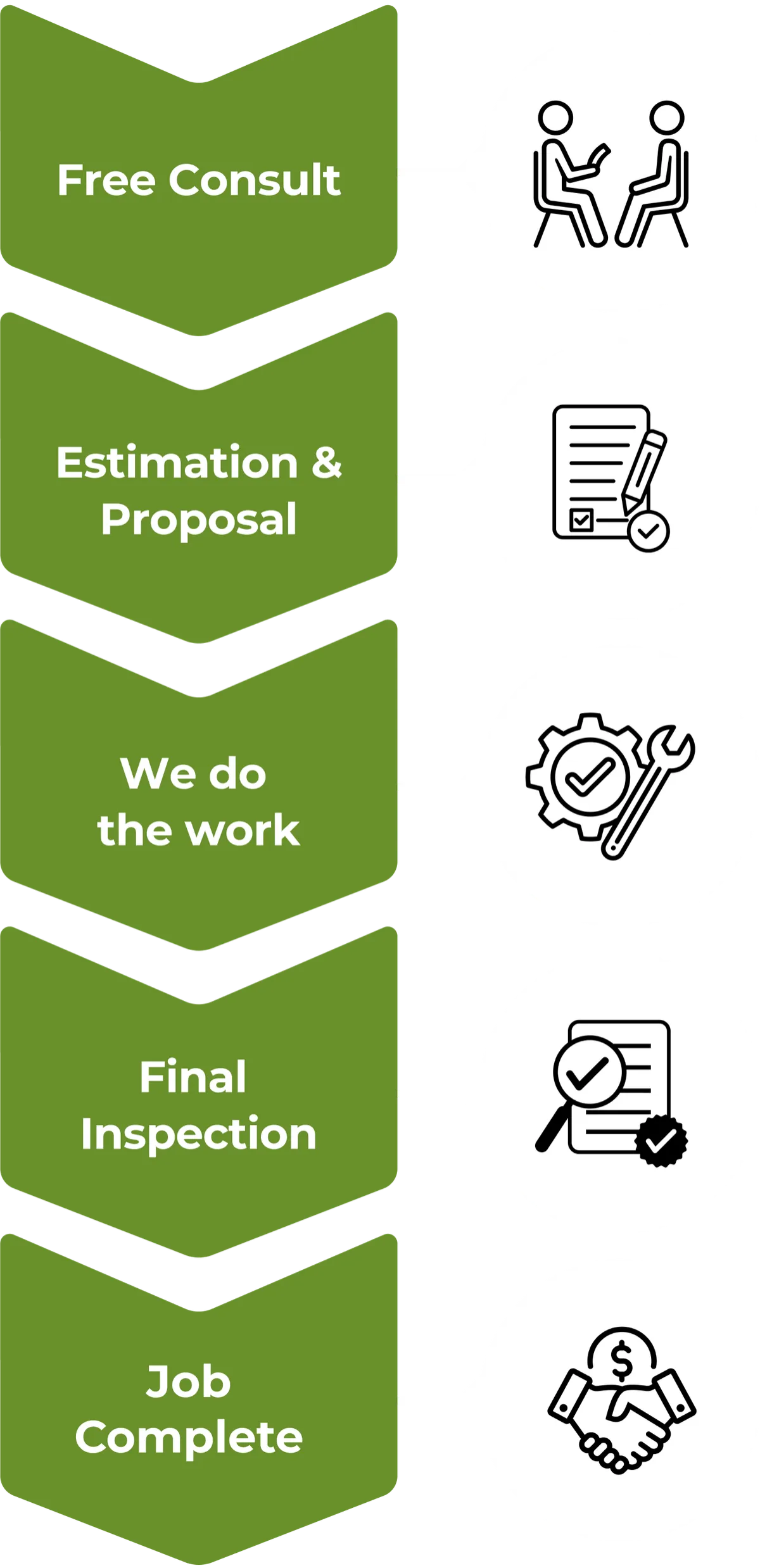
our process
A simple process from first call to finished job.

SERVICE AREAS
proudly serving Bentleigh

FREQUENTLY ASKED QUESTIONS
Your questions answered
Who pays for a shared boundary fence in Victoria?
Yes, if the damage affects only a small area and the remaining structure is sound. A repair may involve replacing a few palings, securing a loose rail or addressing an isolated post problem. If several posts or rails have deteriorated, inspect the wider fence before deciding whether repeated repairs remain practical.
Can Stronghold Fencing collect my neighbour’s share of the cost?
It depends on how far the rot has spread and whether the post can still support the fence. Surface weathering differs from timber that has become soft or structurally weak near the ground. A severely deteriorated post may need replacement or another appropriate structural repair rather than a simple fix to the surrounding palings.
Do I need to speak to my neighbour before replacing a boundary fence?
A leaning fence can indicate loose posts, deteriorated timber near ground level, weakened connections or movement in the surrounding soil. Wind pressure and impacts from falling branches can also shift a section. Check whether the lean affects one bay or a longer stretch, as widespread movement may point to a larger structural problem.
Can I choose a different or more expensive boundary fence?
Yes, new palings can often replace broken or missing boards when the existing rails and posts remain sound. New timber may look lighter than the older boards at first, and the colour may differ until it weathers. The repair should also account for the spacing of neighbouring palings and the condition of their fixings.
How do I know where the boundary fence should go?
Repairs may be practical when the damage is limited and most posts, rails and palings remain sound. Replacement may deserve consideration when several posts have rotted, long sections lean or the rails and boards have deteriorated across the fence. Assessing the whole structure helps distinguish a local problem from widespread failure.
READY TO take the next step?
get a free quote TODAY!
Stronghold Fencing
South East Melbourne
