

SERVICES
Timber Fence Repairs
We repair damaged timber fences by replacing broken palings, fixing loose rails and addressing problems with fence posts.
GET A FREE QUOTE
100% local
18+ years experience
INSURED
Trusted Local Business
What Is Timber Fence Repairs?
Timber fence repairs involve fixing damaged or weakened parts of an existing wooden fence rather than automatically replacing the entire structure. Depending on the condition of the fence, the work may involve replacing broken palings, securing loose rails, repairing frame connections or addressing posts that have shifted or deteriorated. The right repair depends on where the damage sits and whether the surrounding timber remains sound.
Outdoor fences face ongoing exposure to rain, sunlight, changing temperatures, soil moisture and wind. Timber can split, warp or rot, while fixings may loosen as boards move over time. A damaged section can gradually affect adjoining parts if the fence no longer holds its shape or supports its own weight properly. For homeowners in Bentleigh, timely repairs can help maintain privacy and keep a boundary in usable condition. The first step is to inspect the palings, rails and posts together. Replacing a few boards may be sufficient when the frame remains firm, but widespread rot or several unstable posts may call for more extensive work.
Why Choose Stronghold Fencing for Timber Fence Repairs
Repairs That Consider the Frame
A timber fence relies on its posts and rails to support the palings. Replacing a broken board alone will not address a loose rail or a post that has started to move. We look at the condition of the fence structure when carrying out repair work, so the damaged section receives attention in the context of the surrounding components.
Secure Frame Connections
We screw fence frames together rather than using framing nails. This construction method is relevant when repairing timber fencing because rails and posts form the support for the visible boards. Where a repair involves frame connections, the condition of the existing timber matters. We assess the affected section and determine which components need attention rather than treating every damaged paling as an isolated problem.
Allowing for Natural Timber Movement
Timber changes with moisture and weather conditions, which can cause boards to contract, expand or develop gaps. We use extra palings when building fences to account for this movement. During a repair, the condition and spacing of the existing boards help guide the work. Matching the repair to the surrounding fence helps maintain a consistent boundary while addressing the damaged area.
Direct Work by Our Own Team
We carry out our own fencing work rather than subcontracting installations. Stronghold Fencing has worked in fencing since 2008, giving us experience with timber fence construction and the components that support it. This background informs our approach to repairs, from assessing damaged palings to considering the condition of the posts and rails before deciding how much work a section needs.
What Timber Fence Repairs Covers
Timber fence repairs can address individual broken or missing palings, loose boards, damaged rails, weakened frame connections and posts that have shifted or deteriorated. The extent of the work depends on the location and severity of the damage, along with the condition of nearby timber. A fence with sound posts and rails may only need a few components replaced, while widespread structural deterioration can require more extensive work. We assess the affected section and its surrounding structure to determine whether a local repair is practical or whether replacement deserves consideration.
Signs You Need Timber Fence Repairs
Check for palings that hang loose, split down the grain or have fallen away from the rails. Look for rails pulling away from posts, gaps that have suddenly widened and fence sections that lean when viewed along the boundary. Soft or crumbling timber near ground level may indicate rot, especially where soil or garden mulch remains against the wood. You may also see exposed fixings, broken frame connections or boards that flap in strong winds. If several posts move or long sections lean, the damage may extend beyond the visible boards and require a broader assessment.
DISCOVER WHAT OUR CUSTOMERS HAVE TO SAY ABOUT US
REVIEWS
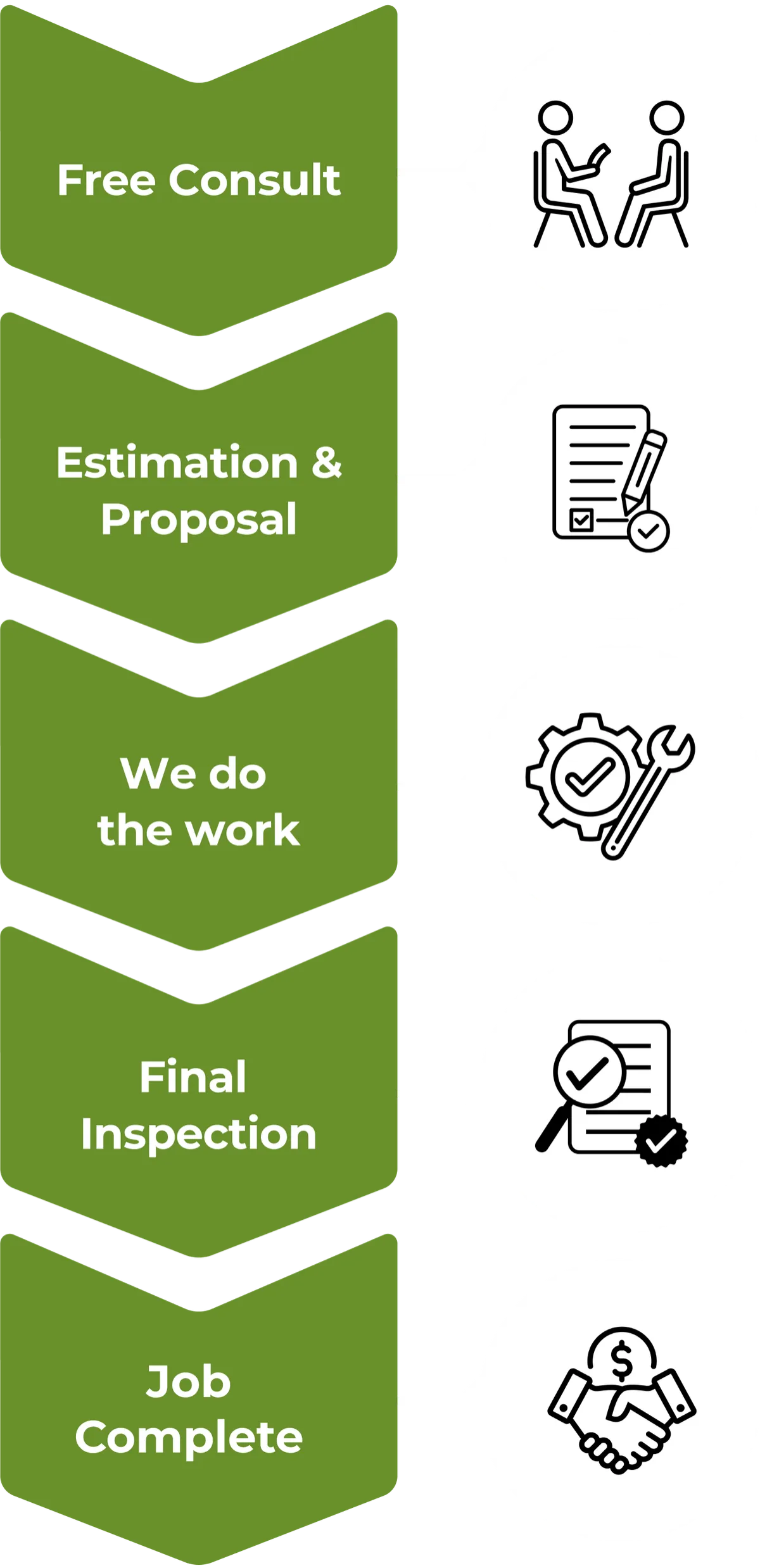
our process
A simple process from first call to finished job.

SERVICE AREAS
proudly serving Bentleigh

FREQUENTLY ASKED QUESTIONS
Your questions answered
Can I repair a timber fence without replacing the whole fence?
Yes, if the damage affects only a small area and the remaining structure is sound. A repair may involve replacing a few palings, securing a loose rail or addressing an isolated post problem. If several posts or rails have deteriorated, inspect the wider fence before deciding whether repeated repairs remain practical.
Can rotten timber fence posts be repaired?
It depends on how far the rot has spread and whether the post can still support the fence. Surface weathering differs from timber that has become soft or structurally weak near the ground. A severely deteriorated post may need replacement or another appropriate structural repair rather than a simple fix to the surrounding palings.
Why is my timber fence leaning?
A leaning fence can indicate loose posts, deteriorated timber near ground level, weakened connections or movement in the surrounding soil. Wind pressure and impacts from falling branches can also shift a section. Check whether the lean affects one bay or a longer stretch, as widespread movement may point to a larger structural problem.
Can new palings be fitted to an old timber fence?
Yes, new palings can often replace broken or missing boards when the existing rails and posts remain sound. New timber may look lighter than the older boards at first, and the colour may differ until it weathers. The repair should also account for the spacing of neighbouring palings and the condition of their fixings.
When should I repair a timber fence instead of replacing it?
Repairs may be practical when the damage is limited and most posts, rails and palings remain sound. Replacement may deserve consideration when several posts have rotted, long sections lean or the rails and boards have deteriorated across the fence. Assessing the whole structure helps distinguish a local problem from widespread failure.
READY TO take the next step?
get a free quote TODAY!
Stronghold Fencing
South East Melbourne
