

SERVICES
Timber Paling Fencing
We build timber paling fences for homeowners who want privacy, a clear boundary and a practical timber finish.
GET A FREE QUOTE
100% local
18+ years experience
INSURED
Trusted Local Business
What Is Timber Paling Fencing?
Timber paling fencing uses upright timber boards fixed to horizontal rails and supported by posts set into the ground. The overlapping or closely spaced palings create a solid boundary that helps separate neighbouring properties and provides privacy around gardens and outdoor living areas. Homeowners often choose this style when an old fence has deteriorated, a property needs a new boundary, or a damaged fence no longer provides adequate separation.
A timber fence needs sound posts, secure rails and properly fitted palings to perform well outdoors. Timber naturally responds to changes in moisture and temperature, so boards can shrink, expand, split or develop gaps over time. Poorly supported posts may lean, while loose fixings can allow sections to move in wind. Stronghold Fencing has installed fences since 2008 and uses posts set 25% deeper than industry standard, screw-fixed frames and extra palings to account for timber movement. For homeowners in Bentleigh, these construction details matter when choosing a new fence for privacy and everyday use.
Why Choose Stronghold Fencing for Timber Paling Fencing
Deeper Set Fence Posts
Stronghold Fencing sets fence posts 25% deeper than industry standard. Post depth plays a key role in supporting a timber paling fence, particularly where wind places pressure on a long, solid fence line. By setting posts deeper, we focus on the support beneath the visible timber structure, rather than relying on the palings alone to create a stable boundary.
Screw-Fixed Frames
We screw fence frames together rather than relying on framing nails. The rails connect the posts and support the palings, so the way we join these components matters to the overall construction. For a timber paling fence, screwed frame connections form part of our approach to building a structure that holds its components together as the timber responds to outdoor conditions.
Extra Palings for Timber Movement
Timber can shrink and expand as moisture levels change, which may leave visible gaps between fence boards. We use extra palings to allow for this natural movement and help reduce gaps as the timber contracts and expands. This approach is particularly relevant for homeowners who want a private boundary without relying on the initial spacing of the boards to remain unchanged over time.
Direct Installation by Our Own Team
We install our own fences rather than subcontracting the work. This means the team carrying out the installation follows our construction approach, including deeper post placement, screwed frames and additional palings. Since we have been fencing since 2008, we bring established experience to the practical decisions involved in building a timber paling fence for a residential boundary.
What Timber Paling Fencing Covers
Timber paling fencing involves setting posts along the planned fence line, attaching horizontal rails and fixing timber palings across the frame. The work includes constructing a new fence for a residential boundary or replacing an existing fence that no longer provides suitable privacy or separation. The layout and materials depend on the property, ground conditions, required fence height and boundary position. Before work begins, neighbours should discuss shared boundary fencing and confirm the proposed arrangement. Local council requirements may also affect fence height, placement or permit needs.
Signs You Need Timber Paling Fencing
Look along your existing fence for palings that have split, warped, rotted near ground level or pulled away from their fixings. Gaps between boards may have widened enough to reduce privacy, while loose rails or leaning posts can indicate that the frame needs attention. You may also see sections moving during windy weather, uneven fence heights or daylight showing through damaged areas. If several posts have shifted or multiple rails have deteriorated, replacing the fence may be more practical than addressing isolated boards. Check the full fence line before deciding whether to repair or replace it.
DISCOVER WHAT OUR CUSTOMERS HAVE TO SAY ABOUT US
REVIEWS
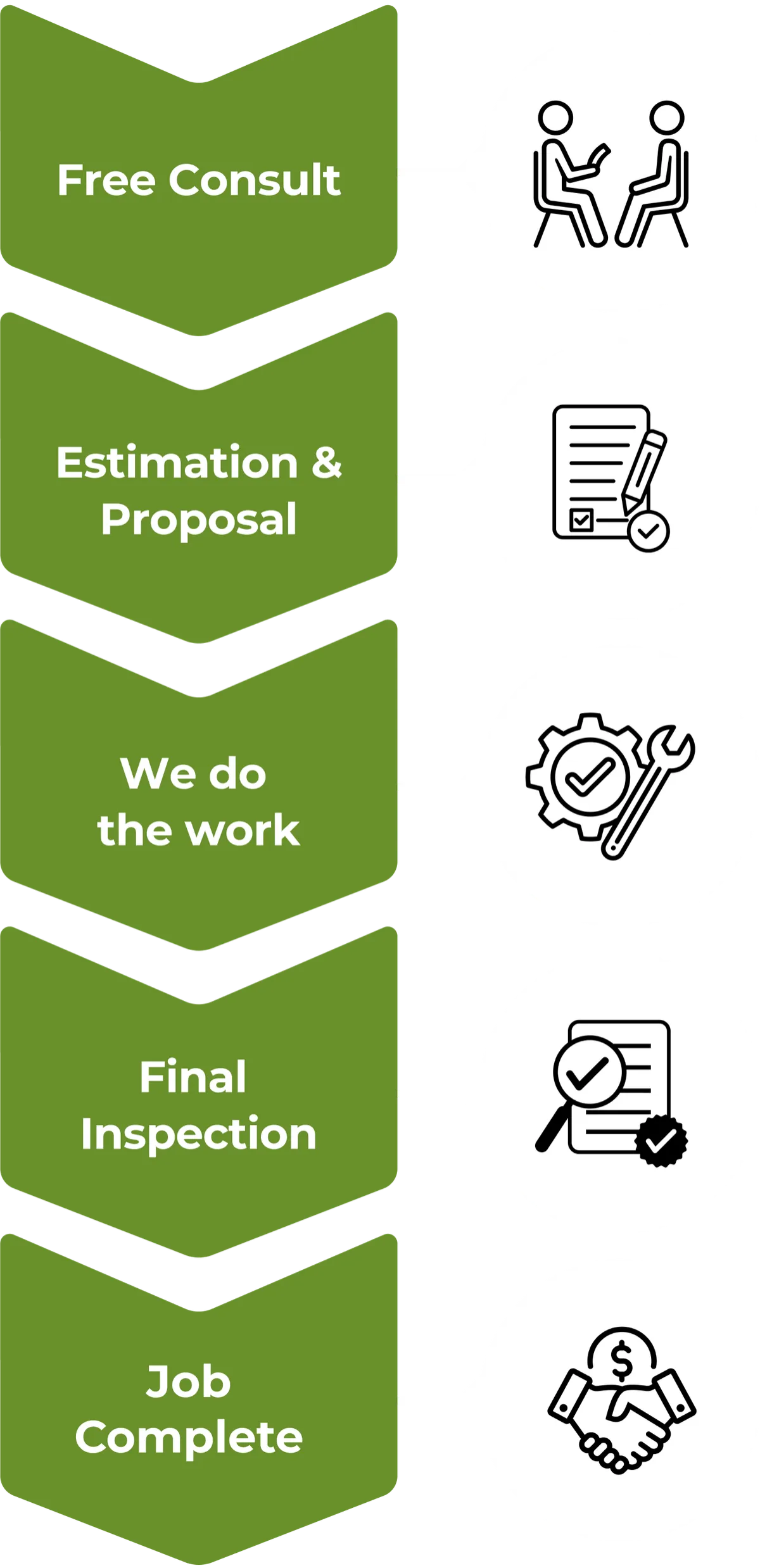
our process
A simple process from first call to finished job.

SERVICE AREAS
proudly serving Bentleigh

FREQUENTLY ASKED QUESTIONS
Your questions answered
How long does a timber paling fence last?
The lifespan of a timber paling fence depends on the timber, ground moisture, drainage, exposure to weather and quality of construction. Posts that remain damp or palings that contact soil can deteriorate sooner. Regularly checking the fence for rot, loose fixings and leaning sections helps identify problems before they affect larger areas.
Why are fence posts set deeper into the ground?
Fence posts support the rails and palings and help the fence resist movement from wind and everyday pressure. Posts set too shallow may shift or lean, particularly in less stable ground. Stronghold Fencing sets posts 25% deeper than industry standard as part of its approach to constructing timber paling fences.
Will gaps appear between timber palings over time?
Gaps can develop because timber changes size as its moisture content changes. Boards may contract during drier conditions and expand when they absorb moisture. Stronghold Fencing uses extra palings to help reduce gaps as the timber contracts and expands. The amount of movement depends on the timber and the conditions around the fence.
Can I build a timber paling fence on a shared boundary?
Yes, timber paling fences are commonly used between neighbouring properties. In Victoria, neighbours generally share the cost of a sufficient dividing fence, although individual circumstances can affect the amount each person pays. Discuss the fence type, position and cost before work starts. Check the relevant council requirements and follow the Victorian fencing notice process if you cannot reach agreement.
Do I need council approval for a timber paling fence in Victoria?
Some fences require a building permit or planning approval, depending on their height, position and property restrictions. Certain side or rear boundary fences may qualify for a building permit exemption, but other rules can still apply, particularly near streets or on corner blocks. Check your local council's requirements before starting construction.
READY TO take the next step?
get a free quote TODAY!
Stronghold Fencing
South East Melbourne
