

BLOG
Why Correct Fence Post Depth and Frame Construction Matter for Timber Fencing in Bayside and South East Melbourne
A timber paling fence can look straight and secure when first installed but develop leaning posts, loose palings or uneven rails over time if its underlying construction is inadequate. In Bayside and South East Melbourne, the design of a fence needs to account for the height of the fence, ground conditions, exposure to wind, drainage and the way its timber components are joined.
Two factors have a major influence on how a timber fence performs: the installation of its posts and the construction of its frame. Posts transfer loads into the ground, while the frame distributes those loads along the fence. If either part is poorly constructed, problems can develop across multiple sections rather than remaining confined to one paling.
How Post Depth Affects Fence Stability
Fence posts support the weight of the rails and palings and resist forces acting against the fence. When wind pushes against a solid timber paling fence, the posts and their footings must resist the resulting sideways pressure. If the posts cannot maintain their position, the fence may lean or move at the joints.
Post depth should be determined by the fence height, post dimensions, soil conditions, footing design and exposure. A taller fence generally experiences greater wind loading than a lower one because it presents a larger surface to the wind.
Timber Queensland's residential timber fence guidance gives approximate installation depths of 450 mm for fences up to 1.2 metres high and 600 mm for fences between 1.2 and 1.8 metres high under typical soil conditions. It also recommends post holes at least 300 mm in diameter. These figures are guidance for the conditions described, not universal requirements for every property.
Poor ground conditions or higher fences may require a different footing design.
Deeper posts can provide additional embedment, but depth alone does not determine stability. A narrow footing, loose soil, inadequate support or poor installation can still lead to movement. The footing and post dimensions need to suit the actual fence and site.
Why Soil and Drainage Must Be Considered
Ground conditions can vary between properties, even within the same suburb. Previous excavation, landscaping, garden beds, buried fill and nearby construction can change how well the ground supports a fence post.
Loose or recently disturbed soil may offer less resistance to sideways movement than firm ground. Where water collects around a post, the surrounding soil may soften, and persistent moisture can contribute to the deterioration of timber that is not suitable for in-ground use.
Drainage should therefore be considered before post holes are dug. Check whether surface water flows towards the proposed fence line, whether garden beds will raise the soil level and whether paving or retaining structures could affect water movement.
Timber selection is also important. Timber intended for direct ground contact needs an appropriate preservative treatment level. Timber Queensland's residential fencing guidance recommends H4 treatment for posts in the ground and H3 treatment for above-ground components such as rails and palings, subject to the product's suitability and relevant specifications.
The base of the fence should also be designed to avoid unnecessary contact between untreated timber and damp soil. Burying palings in garden soil or allowing mulch to accumulate against the fence can increase moisture exposure and shorten the service life of susceptible timber.
How Frame Construction Influences the Finished Fence
The frame consists primarily of the posts and horizontal rails that support the palings. Its construction determines how loads are transferred along the fence and how securely the individual sections remain connected.
Rail spacing and dimensions need to suit the fence height and the timber being used. Taller fences may require additional support compared with shorter fences. Posts that are spaced too far apart can place greater demands on the rails, potentially contributing to sagging or movement.
Connections between rails and posts are another important detail. Screwed joints, nails and other suitable fixings can be used in timber fence construction, but the fixings must be appropriate for the timber, joint design and outdoor conditions. Corrosion-resistant fixings are particularly important where the timber treatment or surrounding environment could cause ordinary steel fasteners to deteriorate.
Stronghold Fencing uses screwed frame connections rather than a house framing nail gun. The aim is to build the frame using a consistent method that suits the fence construction. Regardless of the fixing method, joints need to be secure, rails correctly aligned and posts properly supported.
A frame should also be checked along its full length. A fence may appear straight at the top while individual rails are twisted or joints are poorly secured. Checking the frame before the palings are fixed makes these issues easier to identify and correct.
Timber Movement and Paling Gaps
Timber responds to changes in moisture content by expanding and contracting. This natural movement affects the appearance of a paling fence and can influence how closely boards should be installed.
When timber dries, palings can shrink and gaps may become more visible. When moisture levels rise, the boards can expand. The amount of movement depends on the timber species, how the timber was dried and the conditions to which the fence is exposed.
Installing palings without accounting for this movement can create problems. Boards fixed too tightly may press against each other as they expand, while excessive spacing can leave unwanted gaps after drying.
Stronghold Fencing uses additional palings to help reduce gaps caused by timber movement. The appropriate spacing still depends on the dimensions and moisture condition of the timber being installed.
Fixing palings securely to the rails also helps limit rattling and movement. If gaps appear later, inspect the boards and their fixing points before assuming that the entire fence needs replacement.
Warning Signs of Construction Problems
A fence that begins leaning, develops loose joints or repeatedly loses palings may have a problem beyond ordinary timber movement. These symptoms should be assessed in context.
Posts that move at ground level can indicate inadequate support, deteriorated timber or changes in the surrounding soil. Rails that sag between posts may point to excessive spans, undersized components or failed connections. Splitting around fixing points can occur when fixings are poorly positioned or the timber has deteriorated.
Persistent dampness around the base of posts also deserves attention, particularly where the ground remains wet after rainfall. Correcting drainage problems may help, but timber that has already deteriorated may need replacement.
When assessing a timber fence, inspect the posts, footings where visible, rails, fixings and palings as one connected structure. A localised defect may only need a targeted repair, while widespread movement or deterioration may indicate that a larger section requires rebuilding.
Correct post installation and sound frame construction work together. When the footing design suits the ground, the frame is securely assembled and timber movement is allowed for, a timber paling fence is better equipped to withstand normal use and changing outdoor conditions.
DISCOVER WHAT OUR CUSTOMERS HAVE TO SAY ABOUT US
REVIEWS
our process
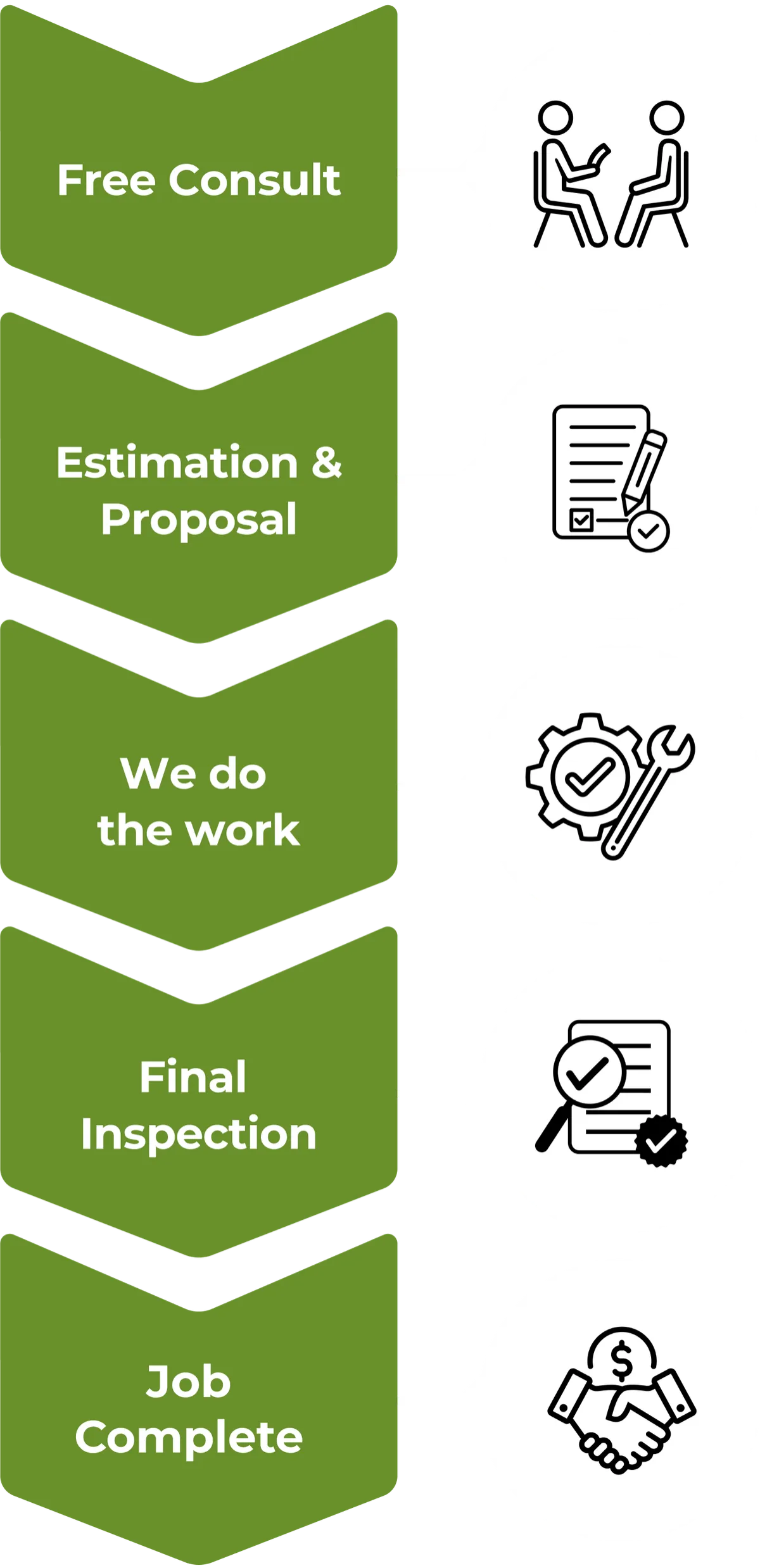
Our process is simple and only contains a few simple steps

SERVICE AREAS
proudly serving Bentleigh

READY TO take the next step?
get a free quote TODAY!
Stronghold Fencing
South East Melbourne
