

BLOG
How to Inspect an Existing Timber Fence in Brighton and Identify When Repairs or Replacement May Be Needed
Timber boundary fences in Brighton are exposed to changing weather, ground movement and the natural ageing of wood. Over time, these conditions can cause palings to loosen, rails to deteriorate and posts to lean. Regular visual inspections help property owners identify developing problems before more of the fence becomes affected.
A useful inspection looks at the entire structure rather than focusing only on the most noticeable damage. For properties in Brighton and across Bayside, checking the posts, rails, palings, fixings and ground around the fence can help distinguish a small repair from a problem that may involve a larger section.
Check the Fence Line and Look for Changes in Alignment
Begin by viewing the fence from both sides, where access is available. Look along the top edge to identify sections that dip, rise or lean away from the original line. A fence that previously appeared straight but now has a noticeable slope may have posts that have moved or weakened.
Pay particular attention to corners, changes in direction and sections supporting gates. These areas can experience movement as the ground changes or the weight on the structure varies.
Compare the alignment of neighbouring sections. If one section is leaning while the others remain straight, the problem may be localised. If several connected sections have moved, the underlying cause could involve multiple posts, the ground conditions or the supporting frame.
Avoid forcing a leaning fence back into position during an inspection. Movement can place additional stress on weakened timber and connections. If the fence appears unstable or could fall, keep people away from the affected area until it can be assessed.
Inspect Posts and Timber Near Ground Level
Fence posts are important structural supports, and their condition near the soil surface deserves close attention. Timber exposed to prolonged moisture can deteriorate, particularly where water collects or soil remains against the wood.
Look for visible cracking, soft or damaged timber, discolouration and signs that the post is no longer holding the fence securely. Check whether soil, garden beds or mulch have built up around the base, as these conditions can make it harder to see deterioration and may keep timber damp.
A post can appear sound above ground while being weakened closer to the soil line. A visual check cannot always reveal the full extent of internal decay, so do not rely on appearance alone when a post is leaning or the fence moves noticeably.
Also observe drainage around the fence. Persistent pooling, recently disturbed soil or signs of erosion may help explain why a post has shifted. Correcting the underlying ground or drainage issue may be necessary alongside any fence work.
Look for Loose Palings, Rails and Fixings
Walk along the fence and inspect the individual palings. Look for missing boards, splits, broken edges, loose fixings and gaps that appear wider than those in neighbouring sections.
Timber naturally changes dimension as its moisture content changes. Some variation in paling gaps is therefore normal. However, a sudden change in spacing, several loose boards or a group of damaged palings may indicate a problem with the rails or their connections.
Next, examine the horizontal rails that support the palings. Look for sagging, splitting, decay and sections that have separated from the posts. Loose nails or screws may allow the frame to move, while deteriorated rails can leave several palings unsupported at once.
Check gates separately, including the supporting posts, hinges and latch. A gate that drags, drops or no longer closes properly may have a problem with its hinges or alignment, but movement in the supporting post should also be considered.
The Victorian Government's fencing guidance explains the general considerations involved in repairing or replacing dividing fences. The physical condition of the existing structure is an important part of deciding what work may be necessary.
Decide Whether Local Repairs or Replacement May Be Appropriate
The number and distribution of damaged components can help indicate the scale of the problem. A few loose palings or a small number of failed fixings may be repairable if the supporting rails and posts remain sound.
Replacement of a larger section may need consideration when several posts have deteriorated, multiple rails have failed or the fence has lost its alignment across a substantial length. Repeated repairs can also become less practical when new damage appears in different parts of an ageing structure.
Before deciding, consider the cause of the damage. Replacing palings will not correct a leaning post, and fixing a rail will not resolve persistent ground movement. The work needs to address the underlying fault rather than only the visible symptom.
If the extent of decay is unclear, a fencing professional can assess the structure and identify which components remain usable. Avoid leaning on unstable sections or attempting to test rotten posts by applying force.
Consider Boundary Responsibilities Before Arranging Work
When a fence separates neighbouring properties, the condition assessment is only one part of the process. Before arranging non-urgent repairs or replacement, discuss the proposed work with the adjoining property owner.
In Victoria, neighbours generally share the cost of a sufficient dividing fence, although individual circumstances can affect responsibility and contributions. If agreement cannot be reached, the Victorian Government explains the formal process through its fencing and notice guidance.
Keep a record of the damage, the proposed work and any agreement about costs. Photographs can help both owners understand which sections need attention and whether the issue appears localised or more widespread.
A careful inspection gives property owners a clearer picture of the fence's condition. By checking alignment, ground-level posts, rails, palings and connections together, Brighton homeowners can make a more informed assessment of whether a limited repair is likely to be sufficient or whether broader replacement needs to be considered.
DISCOVER WHAT OUR CUSTOMERS HAVE TO SAY ABOUT US
REVIEWS
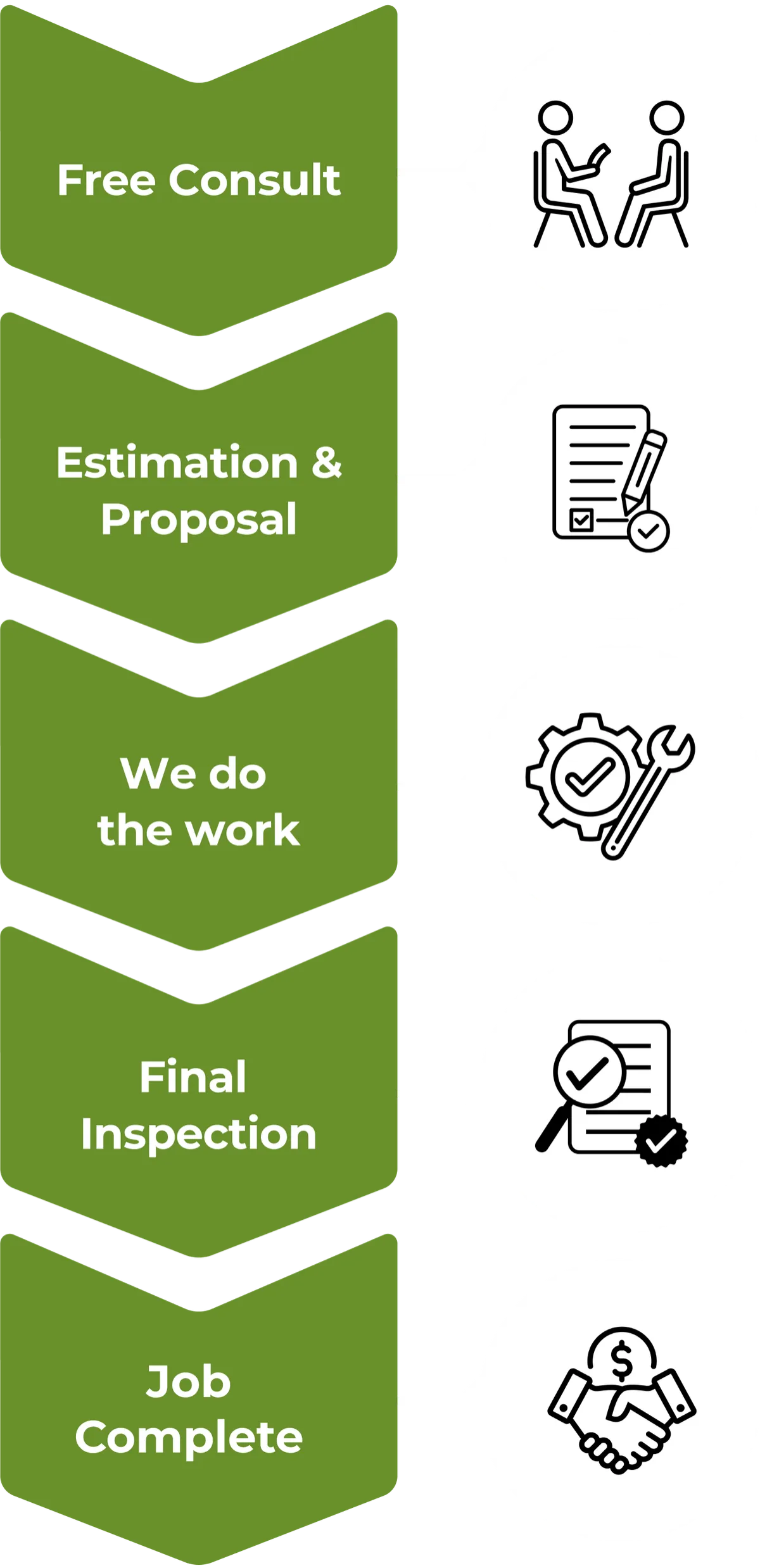
our process
Our process is simple and only contains a few simple steps

SERVICE AREAS
proudly serving Bentleigh

READY TO take the next step?
get a free quote TODAY!
Stronghold Fencing
South East Melbourne
