

BLOG
How Stronghold Fencing Approaches Timber Fence Construction, Workmanship and Shared Boundary Projects
Timber boundary fencing needs more consideration than simply setting posts and attaching palings. Post placement, frame assembly, timber movement and communication between neighbouring property owners can all influence how a fence performs over time. Around Bentleigh, Bayside and South East Melbourne, these details matter when planning a new fence or replacing an existing boundary structure.
Stronghold Fencing has been working in the fencing industry since 2008. Its approach centres on carrying out the work in-house, paying attention to construction details and recognising that a shared boundary fence affects more than one household. Understanding these practices provides useful context for property owners considering how a timber fence should be built and managed.
Keeping Fence Construction Under Direct Control
The way fencing work is organised can affect consistency throughout a project. Some jobs are completed by subcontractors paid according to the amount of fencing installed, while other businesses keep the construction work within their own operation.
Stronghold Fencing carries out its fencing work in-house rather than relying on subcontractors paid by the metre. This approach keeps the installation process under direct control and allows attention to remain on how individual parts of the fence are assembled, rather than focusing only on the length completed.
Timber fencing involves several connected stages. The post positions need to follow the agreed fence line, rails must be fixed securely, and palings need to be arranged with timber movement in mind. If one stage is rushed or overlooked, the finished fence may develop problems even when the materials themselves are suitable.
Direct control over construction does not remove the effects of weather, soil conditions or natural timber movement. It does, however, make the chosen installation method an important part of how the work is carried out.
Setting Posts With Ground Conditions in Mind
Fence posts support the rails and palings, so their placement is central to the stability of the structure. Posts that are not adequately supported can move as the ground changes or as the fence is exposed to wind and other loads.
The required depth depends on factors such as the height and design of the fence, soil conditions, post dimensions and exposure. There is no single depth that suits every property. Soft ground, disturbed soil and areas where water collects may require particular attention during planning.
One of Stronghold Fencing's stated construction practices is to set posts around 25 per cent deeper than what it regards as the industry standard. This is its chosen approach, rather than a universal specification for every timber fence. The appropriate depth for a particular installation still needs to account for the site and the fence design.
Ground-level conditions also matter after installation. Water that remains around the base of a timber post can contribute to deterioration, while soil movement may affect its alignment. A fence can therefore show signs of trouble at ground level even when the upper sections initially appear sound.
Building Frames With Secure Connections
The rails form the framework that supports the palings. Their connections to the posts help the fence remain aligned and keep individual sections together as the structure experiences everyday movement.
Rather than assembling frames with a house framing nail gun, Stronghold Fencing screws the frames together. The distinction is part of its construction method and reflects a deliberate choice about how the frame components are joined.
Fixings should suit the timber and the conditions in which they will be used. Their placement, the condition of the surrounding timber and the way rails meet posts all affect the connection. Over time, loose fixings, split timber or deteriorated rails can allow sections to move and palings to become less secure.
A visual inspection can help identify movement, but a fence should be assessed as a complete structure. A loose paling might result from a local fixing problem, or it may be a symptom of a rail that has moved. Similarly, a leaning section could relate to post movement rather than the palings themselves.
Allowing for Natural Timber Movement
Timber responds to changes in moisture content. As conditions change, boards can shrink or expand, which may affect the gaps between palings and the appearance of the fence.
Paling placement needs to account for this behaviour. If the boards are installed with insufficient overlap or spacing for the chosen timber and conditions, gaps may become more noticeable as the timber dries or changes dimension.
Stronghold Fencing uses extra palings in its construction approach to help reduce gaps associated with timber movement. The number and placement of palings need to work with the fence design and the material being installed. Adding boards does not prevent timber from changing dimension, but the initial arrangement can influence how much open space becomes visible as the fence ages.
This is one reason the finished appearance should not be judged only on installation day. Timber is a natural material, and some variation in colour, grain and dimensions is expected. The aim is to build the fence with these characteristics in mind rather than assume the timber will remain unchanged.
Managing Shared Boundary Projects Fairly
A boundary fence can affect the privacy, security and use of adjoining properties. Planning the construction therefore involves communication as well as physical work.
Discussing the proposed fence with the neighbour before work begins helps establish the intended fence line, design, timing and contribution arrangements. Written records of agreed details can reduce confusion later, particularly if the existing boundary is unclear or the neighbours have different expectations.
In Victoria, the rules for dividing fences generally require neighbours to contribute to the cost of a sufficient fence, subject to the circumstances. The Victorian Government's fencing guidance explains the process for discussing the work, serving a fencing notice and resolving disagreements.
As part of its shared-boundary process, Stronghold Fencing splits the bill and collects the neighbouring owner's share. Clear records of the agreed work and each party's contribution remain important, especially where costs or the proposed fence differ from what either owner initially expected.
Good construction and clear communication address different parts of the same project. A well-built fence depends on suitable materials and careful assembly, while a shared boundary project also benefits from agreement about the work and its costs before installation starts.
DISCOVER WHAT OUR CUSTOMERS HAVE TO SAY ABOUT US
REVIEWS
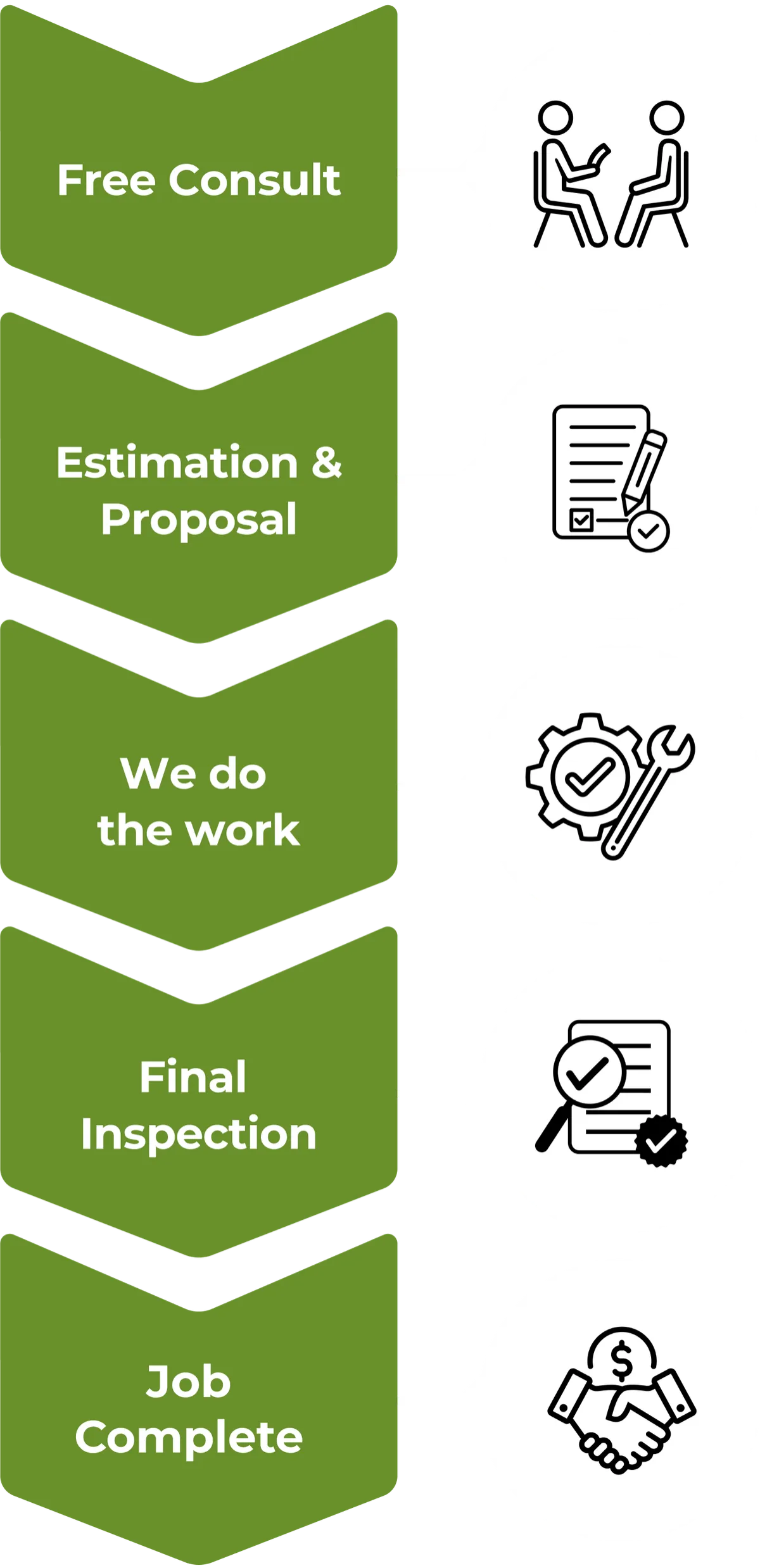
our process
Our process is simple and only contains a few simple steps

SERVICE AREAS
proudly serving Bentleigh

READY TO take the next step?
get a free quote TODAY!
Stronghold Fencing
South East Melbourne
