

BLOG
What Causes Gaps, Leaning Posts and Loose Palings in Timber Boundary Fences Around Mentone and Moorabbin?
Timber boundary fences around Mentone and Moorabbin can develop gaps, leaning posts and loose palings as the timber ages and ground conditions change. These problems do not always have the same cause. A gap between palings may result from natural timber shrinkage, while a leaning fence can indicate movement in the posts, deterioration near ground level or a problem with the footings.
Properties in these suburbs include established residential homes, renovated properties and newer developments. Existing fences may have experienced years of weather exposure, landscaping changes and alterations to neighbouring properties. Identifying the underlying cause of a defect helps determine whether an isolated repair is suitable or whether a larger section of the fence needs attention.
Why Gaps Develop Between Timber Palings
Timber naturally expands and contracts as its moisture content changes. When newly installed palings dry, they can shrink across their width, leaving visible gaps between boards. The amount of movement depends on the timber species, initial moisture content, board dimensions and exposure to outdoor conditions.
Gaps can also develop when palings loosen at their fixing points. Repeated movement caused by wind, contact with vegetation or general ageing can gradually weaken the connection between a paling and its horizontal rail.
The position and pattern of the gaps provide useful clues. Narrow, fairly consistent gaps along a fence may reflect timber shrinkage. Individual palings that have shifted, twisted or pulled away from the rails suggest a different problem. Large gaps concentrated around damaged boards may indicate splitting or deterioration rather than normal movement.
Replacing only the visibly affected boards may be appropriate when the supporting frame remains sound. However, if many palings are loose or the rails have begun to deteriorate, repairing individual boards will not address the underlying issue.
Timber movement should be considered during installation as well. Palings installed too closely together may press against one another when they expand, while excessive initial spacing can leave unwanted gaps as the timber dries. Stronghold Fencing accounts for this movement by using additional palings to help reduce gaps in finished fences.
What Causes Fence Posts to Lean?
A leaning fence usually indicates movement in the post, its footing or the surrounding ground. The fence may gradually tilt in one direction, or several posts may begin to move along the same section.
Wind places sideways pressure on timber paling fences. Because the palings form a relatively solid surface, the posts must resist that pressure through their embedded sections and footings. If the posts are not adequately supported for the fence height and site conditions, movement may develop over time.
Ground conditions can also contribute. Loose fill, disturbed soil, changes in drainage and excavation close to the fence can reduce support around the posts. In some cases, the post itself has deteriorated where it enters the ground, leaving insufficient sound timber to hold the fence upright.
Check whether the lean is limited to one post or affects a continuous run. A single leaning post may indicate localised deterioration or footing failure. Several posts leaning in the same direction may point to a broader problem involving ground support, wind exposure or the original installation.
Pushing a leaning fence back into position does not resolve the cause. If a post has rotted at ground level or its footing has failed, straightening it temporarily may leave the underlying weakness unchanged. The post and footing need to be assessed before deciding whether reinforcement or replacement is appropriate.
Why Timber Deteriorates Near Ground Level
The base of a timber fence is particularly vulnerable to persistent moisture. Rainwater, poor drainage, accumulated soil and garden mulch can keep the lower sections damp. Over time, suitable conditions for timber decay may develop, particularly where the timber is not rated for its exposure or direct ground contact.
Look for soft or crumbling timber, darkened areas, splitting near the ground and posts that move more readily than adjoining posts. Paint or surface discolouration alone does not establish that a post has rotted, so the timber's physical condition also needs to be considered.
Changes to the surrounding garden can make an existing fence more vulnerable. Raising a garden bed or allowing soil to build up against the bottom rail can trap moisture and bring timber into prolonged contact with damp material. Drainage problems may also develop after paving, landscaping or other work changes the direction of surface water.
Keep soil and mulch from accumulating against timber components, and check whether water collects along the fence after rainfall. These steps can help reduce unnecessary moisture exposure, although they will not restore timber that has already deteriorated.
When a post has lost its structural strength, adding fresh concrete around the existing post is not automatically an effective repair. The damaged timber and footing need to be assessed to determine whether the failed section should be removed and replaced.
How Loose Rails and Fixings Affect the Fence
Horizontal rails connect the posts and support the palings. If a rail splits, twists or pulls away from a post, the palings attached to it may become loose even when the posts remain upright.
Loose fixings can also cause individual boards to rattle or move in windy conditions. Repeated movement may enlarge the fixing holes, split the timber around a nail or screw, or allow the paling to pull away from the frame.
Inspect the fence from both accessible sides where possible. Check whether the rails remain firmly connected, whether the palings sit in a consistent line and whether any fixings have worked loose. Corroded fasteners, cracked rails and damaged timber around connection points may indicate that simply refixing the paling will not provide a lasting repair.
The repair should match the extent of the damage. A sound paling with a loose fixing may only need to be secured again. A split rail or deteriorated post may require replacement before the affected section can be properly rebuilt.
Deciding Whether to Repair or Replace a Fence Section
The condition of the posts, rails and palings should be assessed together. A fence with a few loose boards and a stable frame may be suitable for localised repairs. If several posts are leaning, the rails are failing and timber deterioration is widespread, replacing a larger section may be more appropriate.
Before work begins on a shared boundary fence in Mentone or Moorabbin, property owners should also consider their responsibilities to the adjoining owner. Victorian government guidance explains that neighbours generally share responsibility for a sufficient dividing fence, with contributions depending on the circumstances and the proposed work. Agreement should be sought before arranging ordinary replacement work, and formal fencing procedures may apply if the neighbours cannot agree.
A sound assessment distinguishes normal timber movement from structural problems. Gaps between boards may be cosmetic, but rotted posts, failed footings and loose frame connections can affect the stability of the entire fence. Identifying the cause first makes it easier to choose a repair that addresses the actual defect rather than temporarily hiding its symptoms.
DISCOVER WHAT OUR CUSTOMERS HAVE TO SAY ABOUT US
REVIEWS
our process
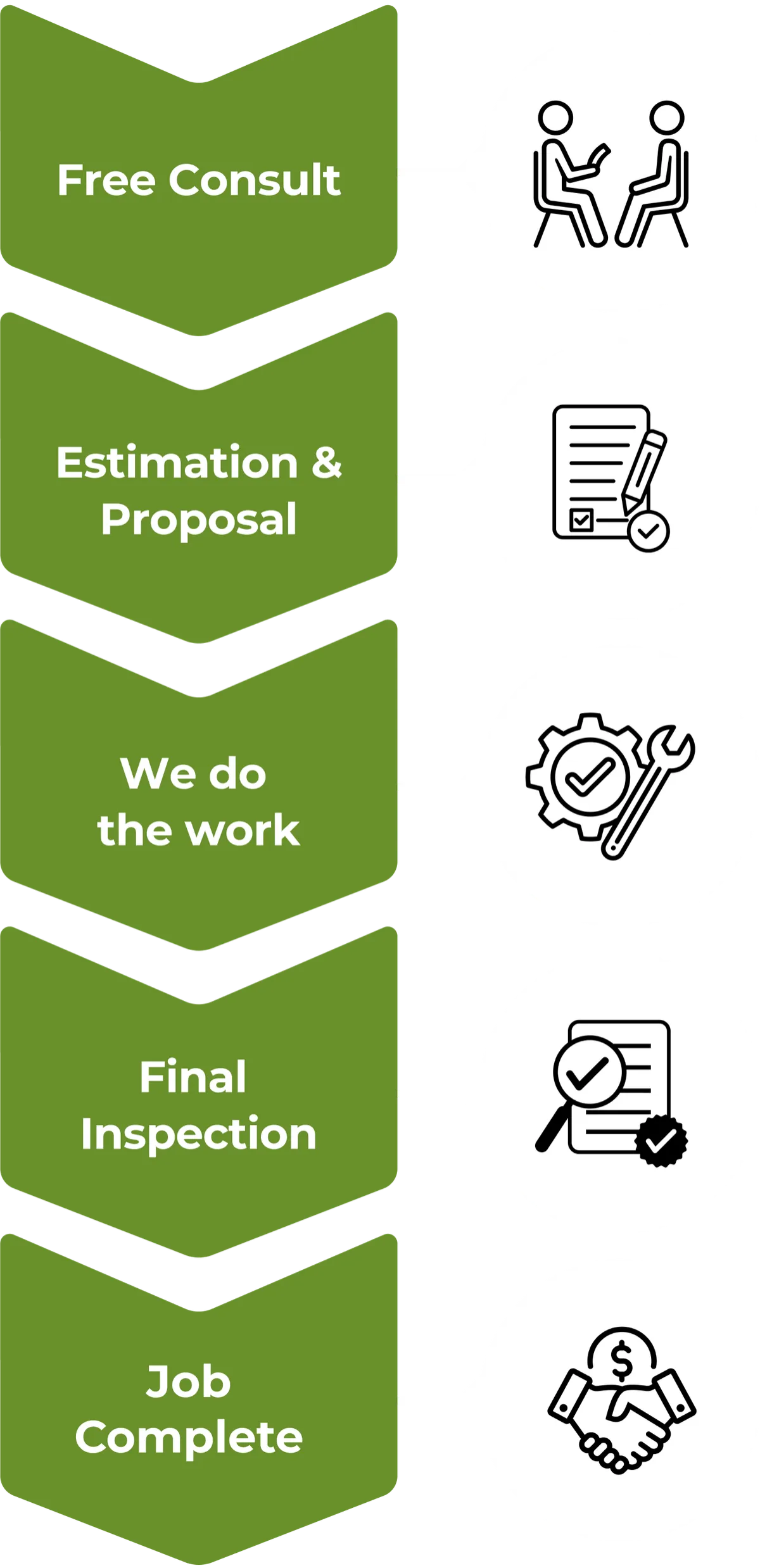
Our process is simple and only contains a few simple steps

SERVICE AREAS
proudly serving Bentleigh

READY TO take the next step?
get a free quote TODAY!
Stronghold Fencing
South East Melbourne
