

BLOG
Timber Boundary Fencing in Victoria: Understanding Neighbour Responsibilities, Fence Notices and Shared Costs Under the Fences Act
Replacing a timber boundary fence involves more than choosing the height, materials and position of the new fence. Property owners in Bentleigh, Mentone, Moorabbin and other parts of Bayside and South East Melbourne also need to understand their responsibilities to adjoining owners before work begins.
Victoria's Fences Act 1968 sets out the legal framework for dividing fences, including contributions to fencing costs, the standard of fence required and the procedures for resolving disagreements. These rules are relevant when an existing timber paling fence deteriorates, when neighbours want to replace an old boundary fence, or when one owner proposes a different fence design.
Understanding the process before arranging construction can help prevent disputes over the fence line, materials, contractor selection and payment.
What Counts as a Sufficient Dividing Fence?
Under Victorian law, adjoining property owners generally share responsibility for a sufficient dividing fence. The term does not mean that every property must have a fence of a fixed height or material. What is sufficient depends on the circumstances of the properties and the purpose the fence needs to serve.
Relevant considerations can include the existing fence, how the adjoining land is used, reasonable privacy and security requirements, and the types of fences commonly found in the area. A timber paling fence may be appropriate between two residential backyards, while a different type of fence may suit other land uses.
The standard of the existing fence can help inform discussions about a replacement. However, an old fence does not automatically establish the only acceptable design for the future. Its condition, suitability and the needs of both properties should be considered.
The law generally requires neighbours to contribute equally towards a sufficient dividing fence, subject to exceptions. If one owner wants a more expensive fence than is reasonably sufficient, that owner will generally need to pay the additional amount unless another arrangement is agreed.
For example, if two neighbours agree that a standard timber paling fence is sufficient but one requests a substantially more expensive design, the extra cost may not be shared equally. The appropriate contribution depends on the circumstances and any agreement between the owners.
The Victorian Government explains these principles in its official guide to fencing in Victoria.
Discuss the Fence Before Arranging Construction
The first step is usually to discuss the proposed work with the adjoining property owner. This provides an opportunity to agree on the fence location, materials, height, construction details and cost contributions before a contractor starts work.
For a timber paling fence, the discussion should cover whether the existing fence needs repairs or complete replacement. It should also identify any additional work, such as removing the old fence, clearing vegetation or addressing ground conditions that affect installation.
Written records are useful even when neighbours agree verbally. Keep copies of the proposed design, quotes, messages and any agreement about how costs will be divided. This reduces the likelihood of later disagreements about what was approved.
It is also important to establish the boundary position if it is uncertain. An existing fence may not sit precisely on the legal boundary. Property owners should not assume that a fence can be relocated simply because one neighbour believes it is incorrectly positioned.
If agreement is reached, the neighbours can proceed according to their arrangement and any applicable legal requirements. If agreement cannot be reached, the formal fencing notice process may be necessary.
What a Fencing Notice Must Cover
A fencing notice is a formal written proposal for constructing, repairing or replacing a dividing fence. Under the Victorian process, the notice should provide enough detail for the adjoining owner to understand the work being proposed and the contribution being requested.
The information generally includes:
The proposed fence line or boundary location.
The type and scope of the fencing work.
The proposed contractor.
An estimate of the cost.
How the proposed costs will be divided between the owners.
Providing a clear description of the work helps the adjoining owner assess the proposal rather than being asked to approve an unspecified project. Quotes can also help explain the expected cost and allow the owners to compare suitable options.
The Victorian Government recommends using a fencing notice when neighbours cannot reach an agreement informally. Registered post can provide evidence of when the notice was sent and received.
Under the standard process, the adjoining owner has 30 days to respond. If they disagree with any part of the proposal within that period, the notifying owner cannot simply proceed with the disputed work without agreement or following the applicable legal process. If no response is received within 30 days, the Act may allow the proposed work to proceed, subject to the relevant requirements.
The current forms and instructions are available through the government's Fencing Notice guidance.
What Happens When Neighbours Cannot Agree?
Disagreements can arise over whether a fence needs replacing, where it should be built, what materials are suitable or how much each owner should contribute.
The Dispute Settlement Centre of Victoria provides information and dispute resolution assistance for fencing disagreements. Negotiation can help neighbours identify an acceptable arrangement without immediately pursuing court proceedings.
If the dispute remains unresolved, either owner may be able to apply to the Magistrates' Court for an order under the applicable fencing legislation. A magistrate can determine relevant issues, including the nature of the fencing work and how costs should be apportioned.
Different procedures may apply in urgent situations. For example, a fence damaged or destroyed by a fallen tree, fire or flood may require urgent repairs. The legal requirements depend on the circumstances, and not every inconvenient or deteriorated fence qualifies as urgent work.
The official Victorian fencing guidance explains the available steps and when urgent fencing procedures may apply.
Check Property Restrictions Before Replacing a Boundary Fence
Agreement between neighbours does not necessarily remove the need to check planning or other property requirements. Fence height, location, heritage controls, easements and planning overlays can affect what is permitted on a particular site.
Some properties may be subject to local planning controls that require additional approval for certain fence designs or heights. Requirements vary by location and property conditions, so owners should check the relevant council information before finalising a proposal.
Boundary position is another important consideration. Where the legal boundary is uncertain, a licensed land surveyor may be needed to identify it accurately. This can be particularly relevant where an old fence has moved, neighbouring properties have been redeveloped or structures sit close to the boundary.
For shared timber fencing projects across Bayside and South East Melbourne, understanding the legal process is part of planning the work. Discussing the proposal, documenting agreement, checking applicable restrictions and following the correct notice procedure can help both property owners make informed decisions before construction begins.
This article provides general information about Victorian fencing rules, not legal advice for an individual dispute.
DISCOVER WHAT OUR CUSTOMERS HAVE TO SAY ABOUT US
REVIEWS
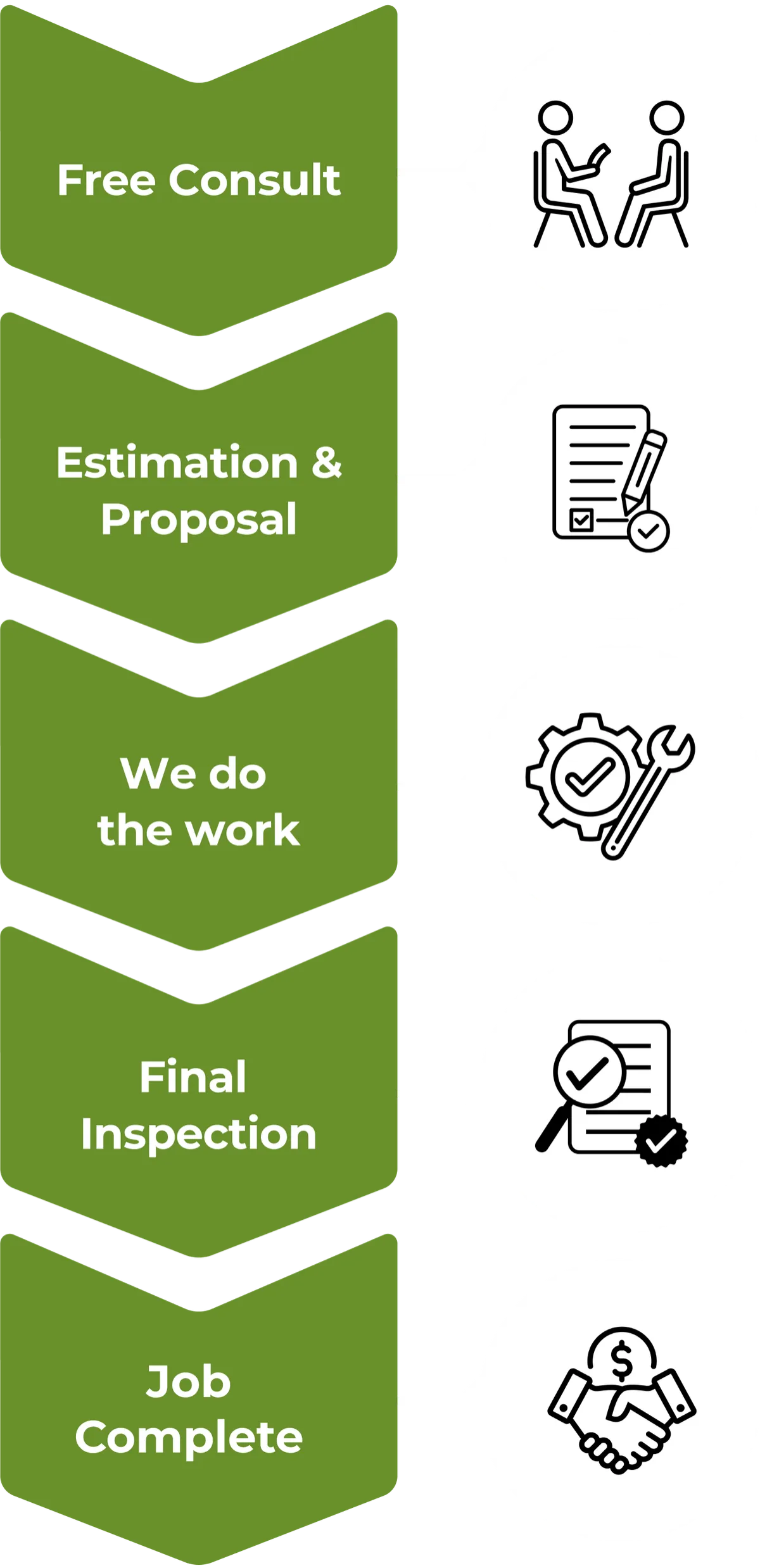
our process
Our process is simple and only contains a few simple steps

SERVICE AREAS
proudly serving Bentleigh

READY TO take the next step?
get a free quote TODAY!
Stronghold Fencing
South East Melbourne
